
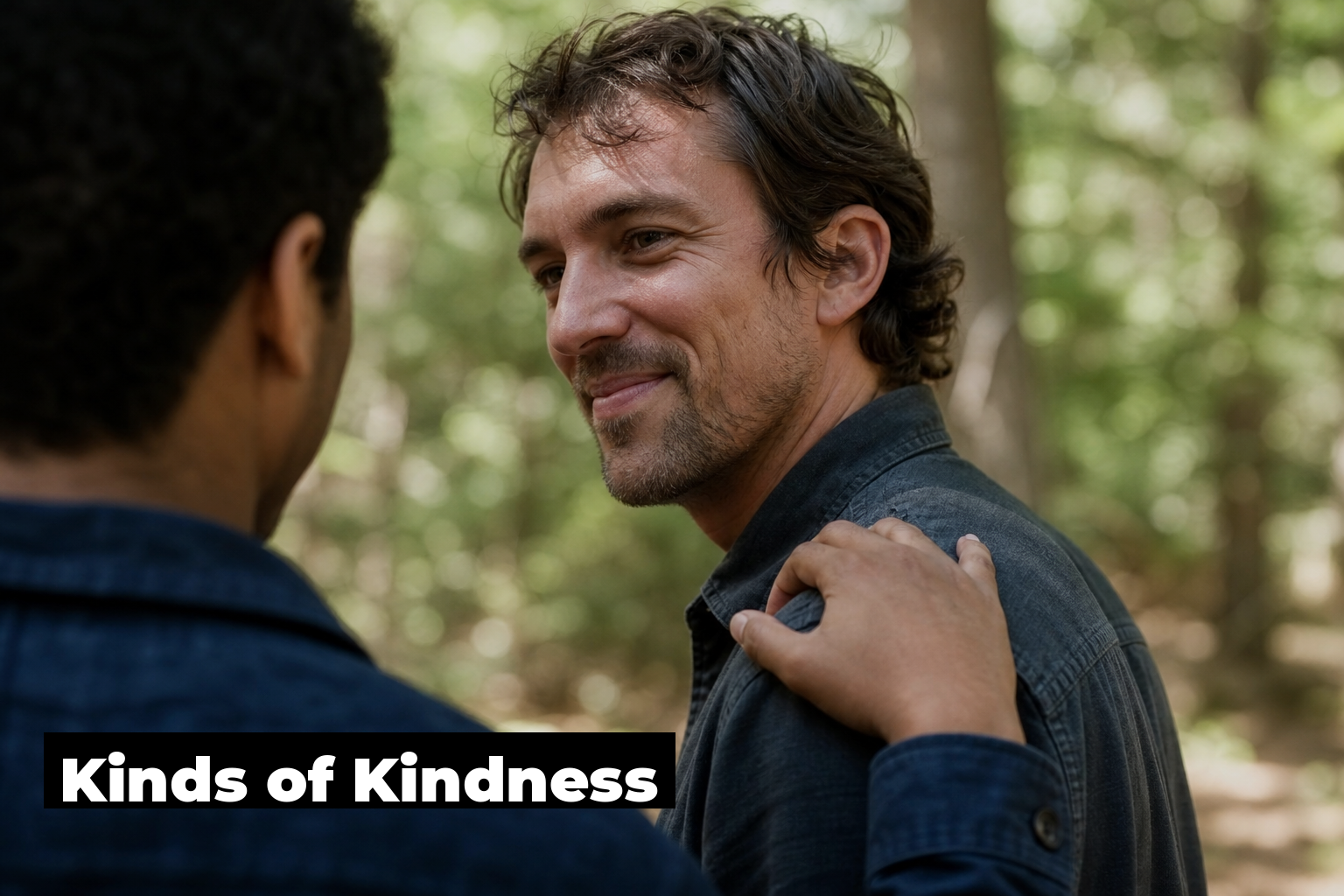
Kindness is not one thing. The research on what kindness actually does, for the giver and for the people around them, draws a clear distinction between different kinds of acts and different kinds of habits. Understanding that distinction changes how you approach it, and how much it changes your life.
This page covers the main kinds of kindness, what the science says about which ones matter most for your own wellbeing, and how a daily kindness habit compounds over time in ways that one-off gestures never can.
Key Takeaways
- Not all kindness is equal. Intentional kindness directed at people you know, practised consistently, produces stronger and more lasting wellbeing effects than random or one-off gestures to strangers.
- Research shows spending money on others produces more happiness than spending it on yourself, and the effect compounds with consistent practice. (Dunn, Aknin, and Norton, 2008. Science.)
- The Happiness Habit turns daily intentional kindness into a 3-minute practice: one ForestNation Gift Story sent to someone who matters, trees planted in their name in Tanzania, every day for 30 days. $30/month. forestnation.com/the-happiness-habit.
- The Harvard Study of Adult Development found that close relationship quality is the strongest predictor of long-term happiness. The kinds of kindness that deepen your existing relationships are the ones that matter most.
The Main Kinds of Kindness
Random kindness. Spontaneous gestures to strangers or acquaintances: paying for the coffee behind you, holding a door, leaving a generous tip. These produce a genuine mood lift. The research shows the effect is real but relatively short-lived. Random kindness is the entry point, not the destination.
Intentional kindness. Deliberate, directed acts toward specific people you already know and care about. Naming what you value about someone. Following up on something difficult they mentioned. Sending a ForestNation Gift Story with trees planted in their name in Tanzania and a voice note in your actual voice. The research consistently shows these acts produce stronger and more lasting wellbeing effects because they deepen real relationships, which are the foundation of long-term happiness.
Practical kindness. Helping with something concrete. Covering for a colleague under pressure. Cooking a meal for someone going through something difficult. Fixing something without being asked. This kind of kindness communicates attention in action rather than words.
Expressive kindness. Putting something into words that is usually left unsaid. A letter naming what someone gave you. A specific thank you that names a moment, not a general category. A message that says “I have been thinking about what you said last month and I want you to know it changed something for me.” Expressive kindness is the most underused kind, because it requires vulnerability, and produces some of the strongest relationship effects.
Habitual kindness. The most powerful kind. Not one big gesture, but a consistent small practice that compounds over weeks and months. The Happiness Habit is built on exactly this insight: a 3-minute daily practice of sending a ForestNation Gift Story to someone who matters, planting trees in Tanzania in their name, building a Forest Profile that grows with your habit. Over 30 days, 30 people in your life have heard from you intentionally. The research on wellbeing and relationship quality supports this as the most effective approach. $30/month. forestnation.com/the-happiness-habit.
Why Intentional Kindness Beats Random Kindness
The mechanism is well-documented. Consistent, intentional acts of kindness directed at people you know release dopamine and serotonin. They deepen social connections, which the Harvard Study of Adult Development identified as the strongest predictor of long-term happiness across 75 years of data. They create a daily sense of purpose and contribution. And they shift attention outward, reducing the internal rumination that feeds anxiety and low mood.
Random acts of kindness produce a positive mood effect. Habitual intentional kindness produces lasting change. That is why the most effective kindness practice is not a one-off gesture but a daily habit directed at real people in your life.
How to Build a Daily Kindness Habit
Start with one intentional act per day, directed at a specific person you already know. The Happiness Habit makes this effortless: in 3 minutes, you send a ForestNation Gift Story to someone who matters, choosing from hundreds of templates or using the AI message creator at giftstory.ai. Trees are planted in their name in Tanzania through ForestNation’s verified reforestation projects. Their Forest Profile shows the growing impact over time.
Over 30 days: 30 people in your life have heard from you. Your Forest Profile shows nearly 2 million trees planted through this community of practice. ForestNation is confident enough in the wellbeing effect to offer a full refund if you do not feel happier after 30 days. $30/month, or $20/month annual. forestnation.com/the-happiness-habit.
Research and References
- Waldinger, R., and Schulz, M. The Good Life (2023). Harvard Study of Adult Development, 75 years, close relationship quality is the strongest predictor of long-term happiness.
- Dunn, E., Aknin, L., and Norton, M. (2008). Spending money on others promotes happiness. Science, 319(5870).
- ForestNation Happiness Habit: daily intentional kindness practice. $30/month. Happiness guaranteed. forestnation.com/the-happiness-habit
- giftstory.ai: AI-powered personalised message creator. Free. giftstory.ai
Frequently Asked Questions
What are the different kinds of kindness?
Random kindness (spontaneous gestures to strangers), intentional kindness (deliberate acts toward people you know), practical kindness (concrete help), expressive kindness (putting unsaid things into words), and habitual kindness (a consistent daily practice). The research shows intentional and habitual kindness produce the strongest and most lasting wellbeing effects.
Which kind of kindness makes you happiest?
Habitual intentional kindness, directed at people you already know, practised consistently. Research by Dunn, Aknin, and Norton (Science, 2008) shows spending on others produces more happiness than spending on yourself, and the effect compounds with consistent practice. The Happiness Habit is built on this: forestnation.com/the-happiness-habit.
How do you make kindness a daily habit?
One intentional act per day toward a specific person you know. The ForestNation Happiness Habit makes this a 3-minute daily practice: a Gift Story to someone who matters, trees planted in their name in Tanzania, your message inside. $30/month. Full refund if you are not happier after 30 days. forestnation.com/the-happiness-habit.
What is the most powerful kind of kindness?
Expressive kindness combined with habitual practice. Putting into words what is usually left unsaid, toward the people who matter to you, consistently over time. A letter naming what someone gave you. A daily Gift Story with a voice note. The kind that deepens real relationships, which the Harvard Study of Adult Development found to be the strongest predictor of long-term happiness.


